Conditioning, Counter Conditioning and Desensitisation for Dogs
Dogs are always learning from the world around them. Every sound, sight, experience and outcome helps shape how they feel and how they respond.
That is why behaviours such as barking, lunging, avoidance, fear, frustration and over-excitement do not happen in isolation. They are influenced by learning history, emotional responses, genetics, environment, development and past experiences.
Understanding conditioning, counter conditioning and desensitisation can help you make sense of your dog’s behaviour and build safer, calmer, more positive responses over time.
That is why behaviours such as barking, lunging, avoidance, fear, frustration and over-excitement do not happen in isolation. They are influenced by learning history, emotional responses, genetics, environment, development and past experiences.
Understanding conditioning, counter conditioning and desensitisation can help you make sense of your dog’s behaviour and build safer, calmer, more positive responses over time.
.jpeg)
Why this matters
Many behaviour problems are not just training problems. They are emotional responses.
A dog who barks at another dog may not be trying to “be dominant” or “be difficult”. They may be feeling worried, overwhelmed, frustrated, or over-aroused. When we understand how our dogs communicate, we can train more clearly and more compassionately.
A dog who barks at another dog may not be trying to “be dominant” or “be difficult”. They may be feeling worried, overwhelmed, frustrated, or over-aroused. When we understand how our dogs communicate, we can train more clearly and more compassionately.
What is conditioning?
Conditioning is the learning process through which dogs form associations.
From a young age, dogs learn that certain things predict certain outcomes. A lead may predict a walk. The crinkle of a treat packet, or the sound of food being prepared may predict dinner. The sight of another dog may predict play, stress, or uncertainty, depending on the dog’s past experiences.
Although classical conditioning and operant conditioning are often explained separately, In real life, dogs are often learning through both emotion and consequences at the same time. A dog’s learning is influenced by many factors, including genetics, breed tendencies, early development, environment, past experiences, brain chemistry and individual sensitivity. That is why different dogs can respond very differently to the same situation.
From a young age, dogs learn that certain things predict certain outcomes. A lead may predict a walk. The crinkle of a treat packet, or the sound of food being prepared may predict dinner. The sight of another dog may predict play, stress, or uncertainty, depending on the dog’s past experiences.
Although classical conditioning and operant conditioning are often explained separately, In real life, dogs are often learning through both emotion and consequences at the same time. A dog’s learning is influenced by many factors, including genetics, breed tendencies, early development, environment, past experiences, brain chemistry and individual sensitivity. That is why different dogs can respond very differently to the same situation.
What is classical conditioning?
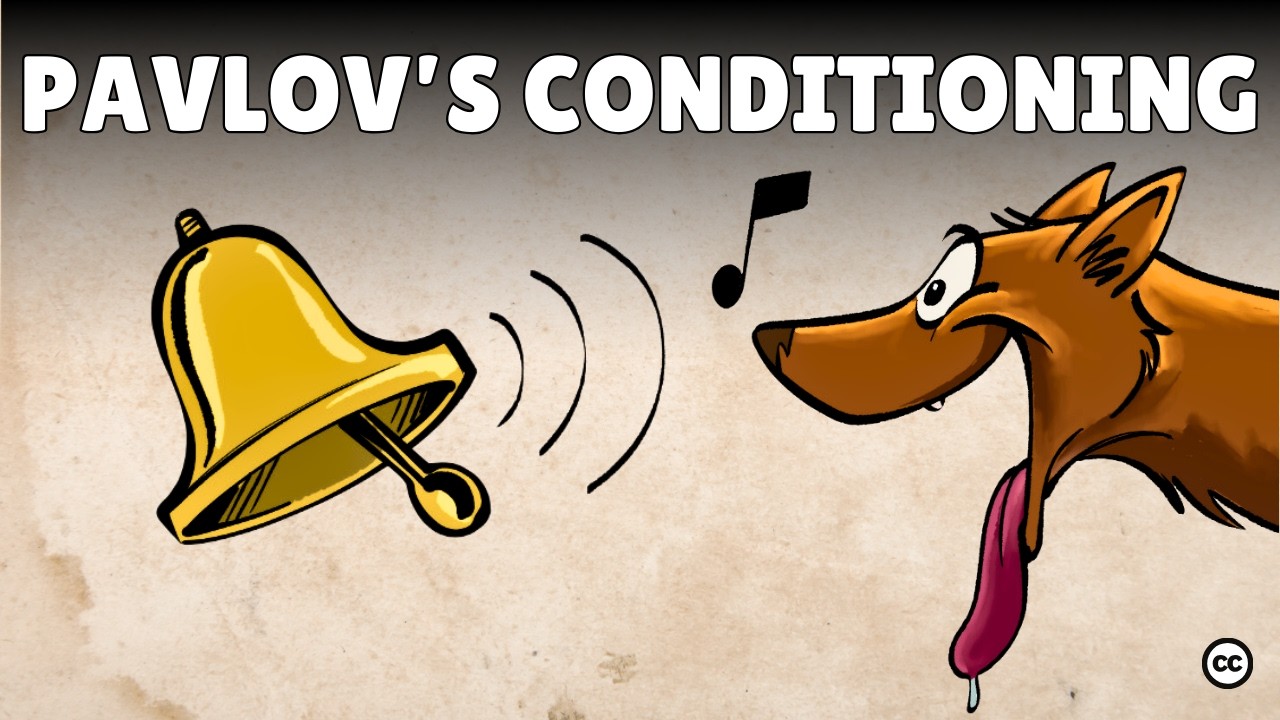
Classical Conditioning theory coined by Ivan Pavlov is about association and emotion. It happens when one thing predicts another, and the dog begins to feel a certain way before anything else even happens.
A simple example is a dog hearing the crinkle of a food packet and becoming excited before the food appears. Over time, the sound itself creates an emotional response because it has been paired with something the dog loves.
This matters in dog training because many unwanted behaviours begin with emotion. A dog may bark at another dog not because it is “being naughty”, but because it feels worried, overwhelmed or over-aroused.
A simple example is a dog hearing the crinkle of a food packet and becoming excited before the food appears. Over time, the sound itself creates an emotional response because it has been paired with something the dog loves.
This matters in dog training because many unwanted behaviours begin with emotion. A dog may bark at another dog not because it is “being naughty”, but because it feels worried, overwhelmed or over-aroused.
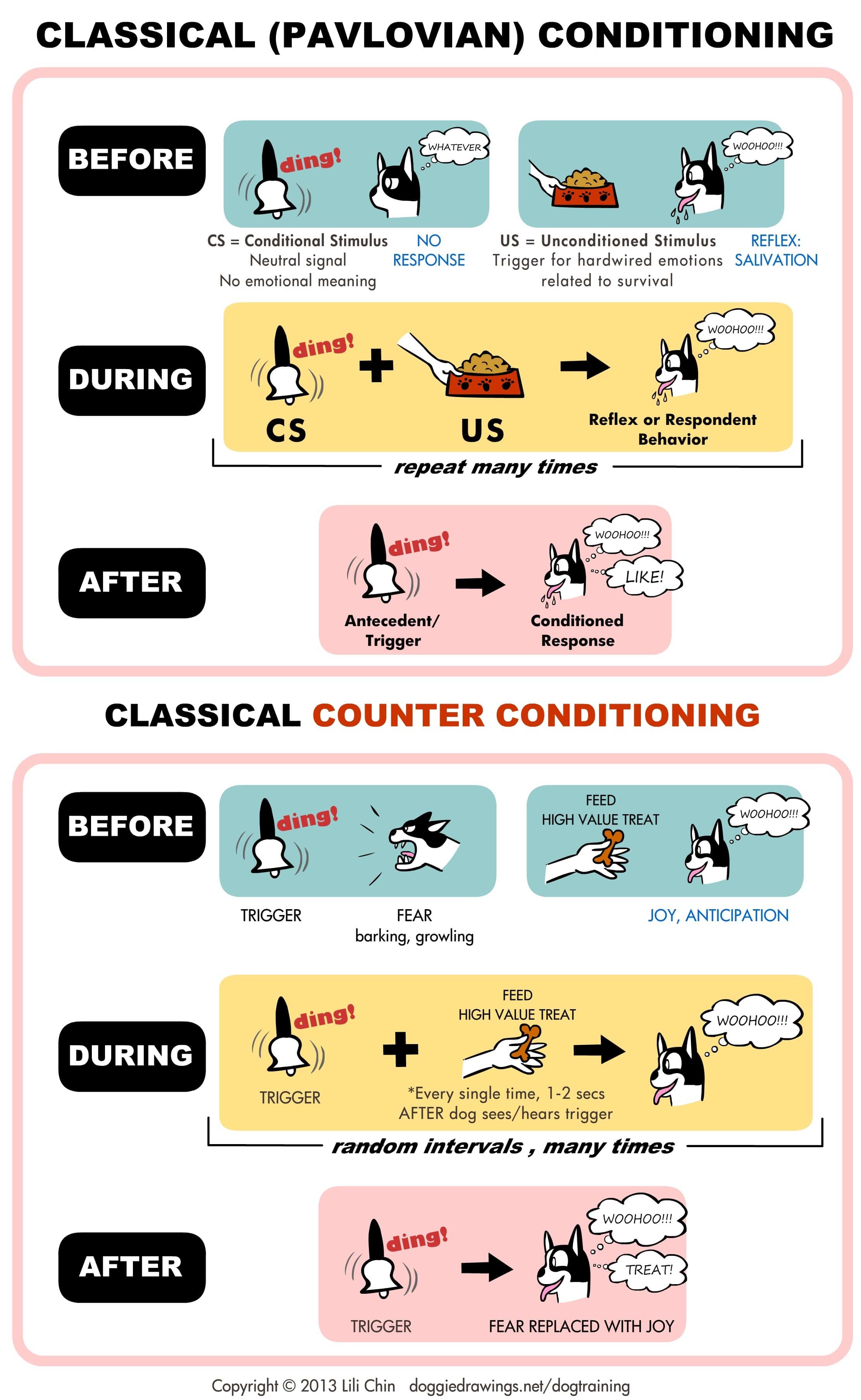
Illustration by Lili Chin showing how a trigger can begin to predict something positive, changing how the dog feels before behaviour escalates.
What is counter conditioning?
- Counter conditioning is the process of changing how a dog feels about a trigger.
- Instead of the trigger predicting fear, anxiety or stress, we carefully teach the dog that the trigger predicts something good. That might be food, distance, movement away, play, sniffing, or another reward the dog truly values.
- Over time, the goal is for the dog’s emotional response to shift from tension or worry toward calm expectation.
- Counter conditioning is especially useful for dogs who struggle with:
- Barking at dogs or people
- Reactivity on walks
- Fear around handling or grooming
- Anxiety in new places
- Frustration when restrained or on the leash
- Over-arousal around exciting triggers like food, toys, children, dogs or friendly people
💡When the emotional response improves, the behaviour often becomes easier to change as well.
Tips for Counter Conditioning
For counter conditioning to work well, the setup matters.
✅ Your dog should still be able to notice the trigger without becoming overwhelmed. The reward should be valuable enough to matter, and your cues should be clear and well timed.
A few key principles:
- Mark or respond at the right moment (The marker must come slightly before the reward, not after or during its delivery to be effective.)
- Use the right Reinforcement, and high value rewards that genuinely compete with the trigger
- Avoid making the pattern too predictable
- Work at a distance where your dog can notice the trigger while still staying calm enough to think and learn. For a helpful visual guide, see Grisha Stewart’s illustration of threshold and working distance.
- Reinforce the appearance of the trigger, not just random moments, or use lower value rewards when no trigger is present. Tip:👍If you don't have a treat on hand but you have conditioned a Marker, Mark and use functional reinforcement.
- Keep sessions short and successful.
What is operant conditioning?
Operant Conditioning Coined by B.F. Skinner. is about behaviour and consequences.
It explains how behaviour becomes more or less likely depending on what happens after the behaviour occurs. In simple terms, behaviours that work are repeated more often.
It explains how behaviour becomes more or less likely depending on what happens after the behaviour occurs. In simple terms, behaviours that work are repeated more often.
This is where we teach skills such as:
- Recall
- Eye contact
- Leash Communication or Loose lead walking
- Calming Signals
- Stationing
- Looking at and Disengaging from triggers
Once the emotional side is improving, operant training helps the dog learn what to do instead.
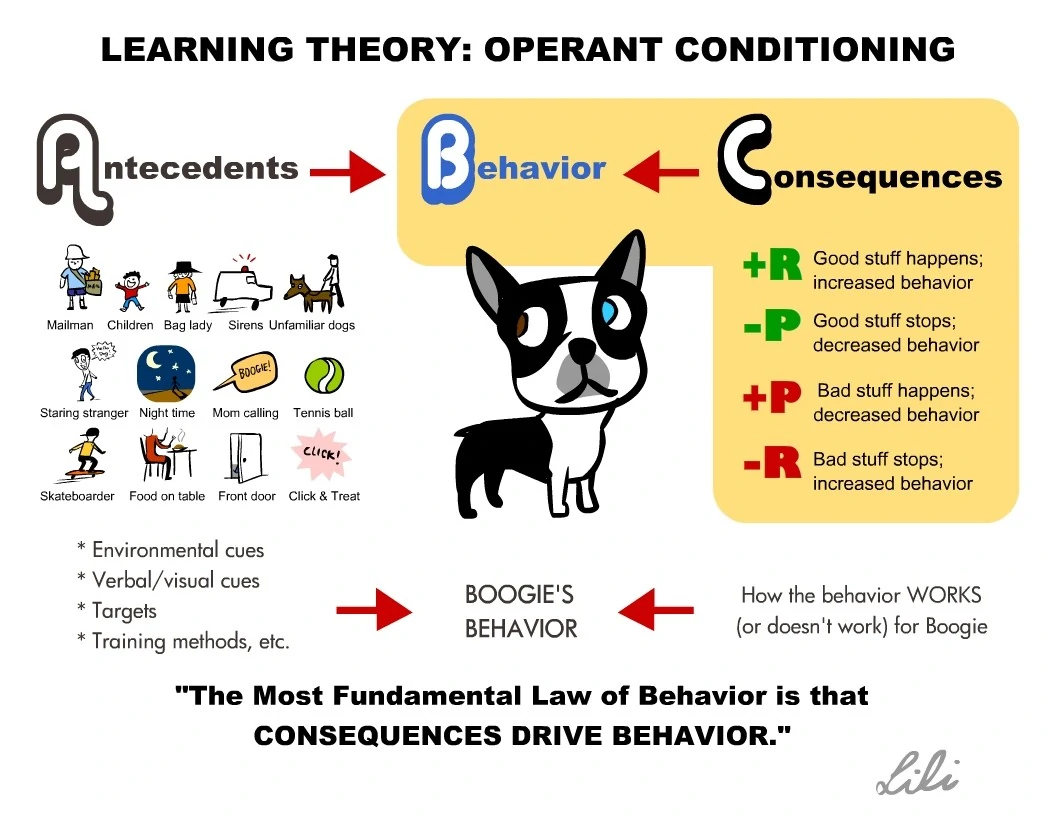
Infographics by Lili Chinn, from her blog on the notes she took from ClickerExpo. Please click on the images to see her amazing notes and insights from some of the leading industry professionals.
Reinforcement and punishment
In operant conditioning, behaviour is influenced by consequences.
Reinforcement strengthens or increases the behaviour.
(+ R) Positive reinforcement means something the dog wants is added, making a behaviour more likely to happen again.
(- R) Negative reinforcement means something unpleasant is removed, making a behaviour more likely to happen again.
Punishment decreases or weakens the behaviour.
(+ P) Positive punishment, means something unpleasant is added, making a behaviour less likely.
(- P) Negative punishment, means something the dog wants is removed, making a behaviour less likely.
(+ R) Positive reinforcement means something the dog wants is added, making a behaviour more likely to happen again.
(- R) Negative reinforcement means something unpleasant is removed, making a behaviour more likely to happen again.
Punishment decreases or weakens the behaviour.
(+ P) Positive punishment, means something unpleasant is added, making a behaviour less likely.
(- P) Negative punishment, means something the dog wants is removed, making a behaviour less likely.
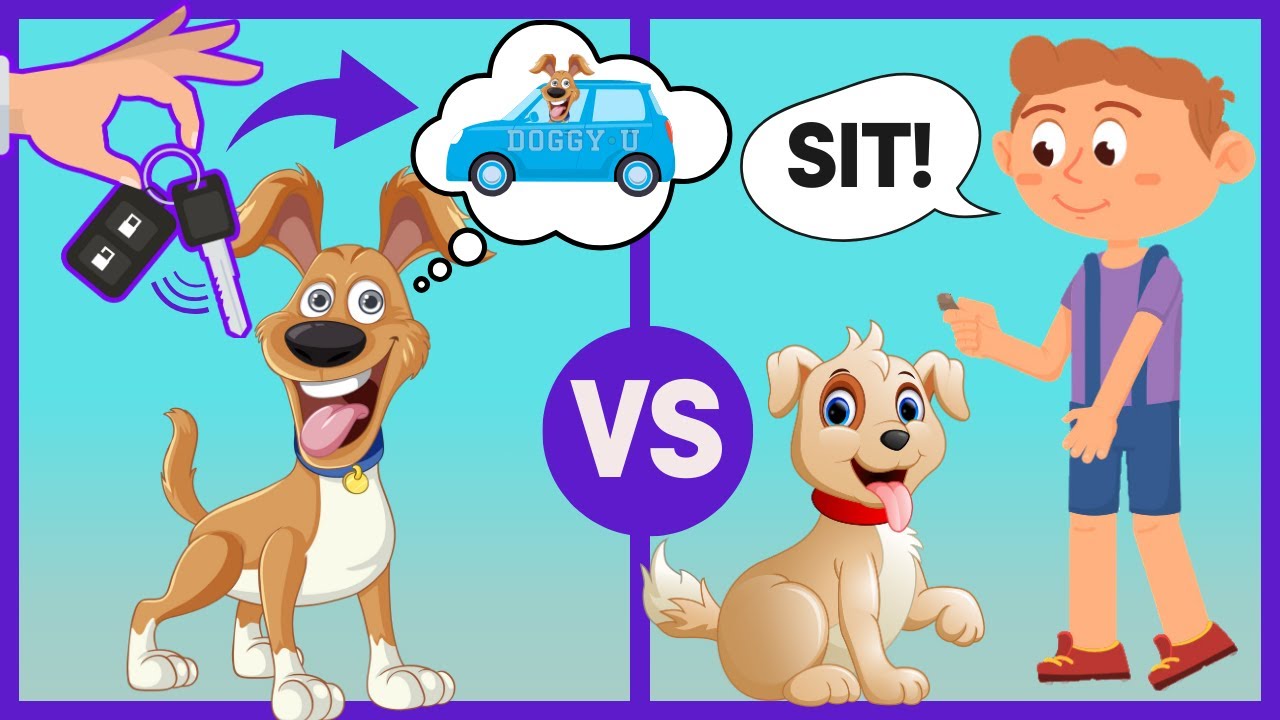
Positive reinforcement focuses on teaching your dog what to do, which helps build clearer and more reliable habits over time. Positive punishment may stop behaviour in the moment, but it does not always help the dog learn a better alternative. See AVSAB’s humane dog training position statement for more on why reward-based training is recommended.
A simple human example is driving: a speed camera may reduce speeding near the camera, while safe-driver rewards or insurance discounts are more likely to encourage good driving habits more broadly.


What is desensitisation?
Desensitisation is the gradual process of helping your dog become less reactive to a trigger by carefully controlling the intensity of exposure.
Rather than forcing your dog to “get used to it,” desensitisation works by introducing the trigger at a level your dog can handle. This allows your dog to stay calm enough to think, learn, and form new associations.
✔️The goal is simple: Your dog can notice the trigger without becoming overwhelmed.
Rather than forcing your dog to “get used to it,” desensitisation works by introducing the trigger at a level your dog can handle. This allows your dog to stay calm enough to think, learn, and form new associations.
✔️The goal is simple: Your dog can notice the trigger without becoming overwhelmed.
How to adjust the intensity of a trigger?
You can make training easier or harder by adjusting the intensity of the trigger. This might mean changing:
- Distance from the trigger
- Duration of exposure
- Whether the trigger is moving or stationary
- The volume or intensity of the trigger
- The environment your dog is in
- How predictable the trigger is
By adjusting these factors, you can keep your dog in a state where learning is possible.
Working below threshold
For desensitisation to work, your dog needs to stay below threshold.
This means your dog can:
- Notice the trigger
- Remain relatively calm
- Respond to you and their Name
- Disengage and give you eye contact when asked
If your dog becomes reactive — barking, lunging, freezing, or unable to take food — the situation is too intense.
At that point, the most important step is increase distance and make the situation easier. You can also read the guide on generalising, raising criteria and proofing, to help with this.
At that point, the most important step is increase distance and make the situation easier. You can also read the guide on generalising, raising criteria and proofing, to help with this.

Start far enough away that your dog can notice the trigger while staying calm enough to think and learn. If your dog becomes reactive, increase distance.
Understanding working distance
A helpful way to think about this is your dog’s working distance, is its their own protective personal space bubble.
This is the space where your dog can:
- Feel safe
- Notice and observe the trigger
- Sniff and look away from the trigger
- Still respond to cues
- Eat food or engage with you
If you move too fast or close, the bubble pops, your dog may cross the threshold into a reactive state where learning stops.
If you stay at the right distance, your dog can begin to build new, positive associations.
Its important to understand this working distance changes constantly and can be different in different situations and even on different days depending on trigger stacking, your dog's physical, mental and emotional state.
Helpful visual guide: If you’re unsure what the right distance looks like, you can view Grisha Stewart’s BAT illustration of threshold and working distance for a helpful visual reference.
Desensitisation and counter conditioning together
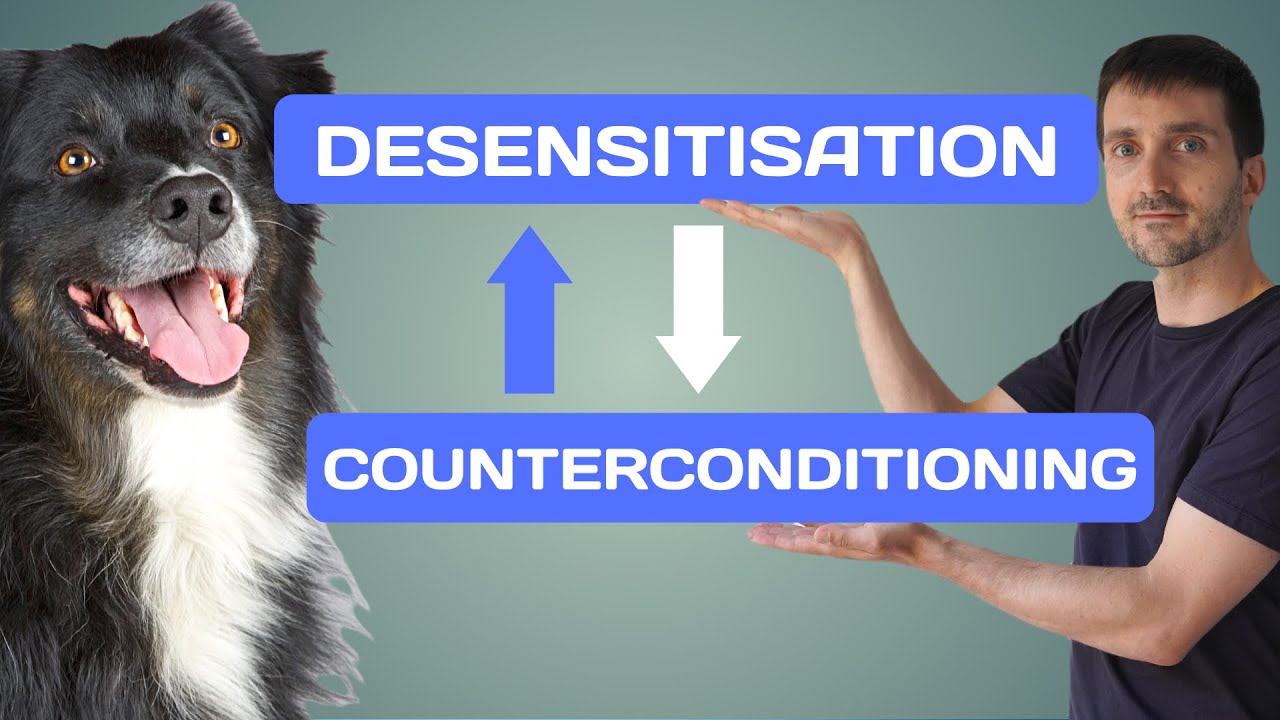
Desensitisation and counter conditioning are most effective when used together.
- Desensitisation controls the intensity of the trigger
- Counter conditioning changes how your dog feels about the trigger
Together, they allow your dog to:
- Feel safer
- Stay calmer
- Learn more effectively
- Develop better long-term behaviour